
Blog ·
How Japanese, Thai and worker languages fit into a Thai factory system

When you actually put a system into production on a Thai factory floor, one question always comes up: "Do we need Japanese and Thai? Do we also need English? Do we go all the way and support each worker's native language?"
In practice, this is not a three-way choice. What actually works is building three language layers into the same system. The Japanese manager, the Thai floor lead, and the multi-national operator need different information, and they can absorb very different amounts of cognitive load. If you just run every screen through a translation, something on the floor will break, somewhere.
This column is on how we structure that three-layer design, drawing on our multi-branch equipment inspection SaaS.
Workforce mix
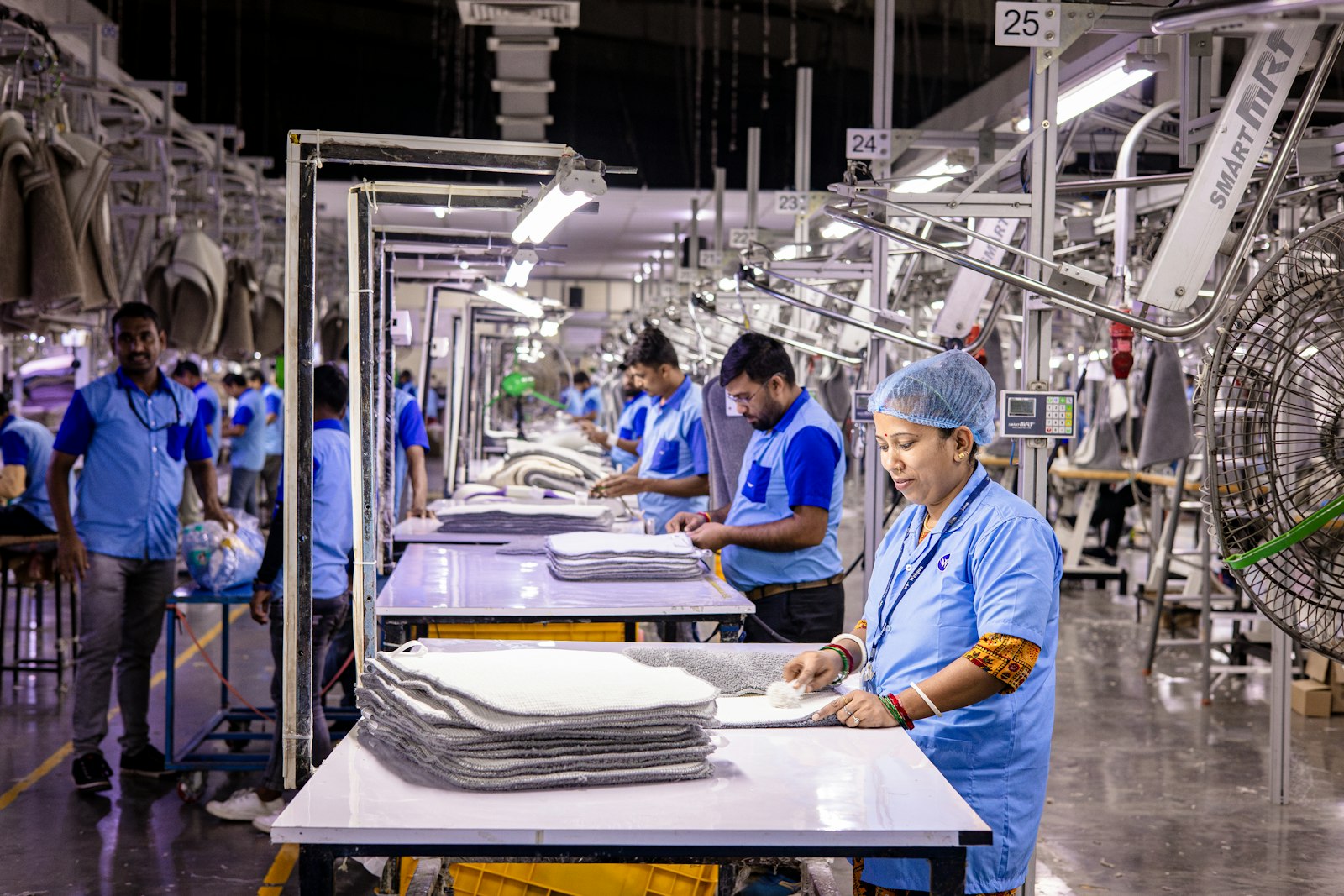
The workforce mix on a Thai factory floor is more diverse than most people assume. Depending on the plant, you commonly see:
- Japanese managers / expats: a handful to a dozen
- Thai floor leads and staff: tens to hundreds
- Foreign-national operators: Myanmar, Cambodian, Nepali, Lao, Filipino and others
Build the UI thinking "Thai is enough" and a large chunk of the foreign-national operators cannot read it. Fluent Thai reading is mostly limited to Thai staff. Forcing everyone into English also does not really work — the training cost is high for the value you get.
The three layers
Layer 1: Japanese managers
Site-wide roll-ups, trends, anomaly detection, dashboards for judgment. Monthly report to the Japan HQ. Language: Japanese.
This layer can carry high information density. Managers log in daily and cross-reference multiple screens, so we design for that. Long text is fine; they get used to it.
Layer 2: Thai floor leads
Master data maintenance, permission management, shift scheduling, work assignments, daily report export. Language: Thai (English as fallback).
This layer is used by Thai supervisors. They understand the business logic deeply but do not read Japanese. Medium-density UI, business-jargon copy is acceptable.
Layer 3: Foreign-national operators
QR scan, checklist answer, start/end-of-shift report, simple numeric entry. Language: the operator's native language (Burmese, Khmer, Nepali, Vietnamese and so on).
This layer is designed to minimise the amount of text the operator has to read. Tap a button, scan a QR, choose OK / NG — that's the interaction vocabulary. Text is kept short; colour, icons and numbers do the recognition. When text is required, we show it in the operator's own language.
This is where multi-language support pays off. Cover 10-plus languages and you can absorb changes in workforce nationality without redesigning the UI.
Design principle
The most important part of the three-layer split is this: do not translate the same screen into three languages. The screens themselves are different per layer.
The Layer 1 manager dashboard and the Layer 3 operator scan screen may as well be different applications. They share a database but the UI is different by design. Commit to this from day one, or you end up with "translations are too long and the screen breaks" and "operators can't find the button" problems later.
Translation operations
The translation workflow itself runs on a different cycle per layer.
- Layer 1 (Japanese): Written in-house. Long cycle. Copy changes are not frequent.
- Layer 2 (Thai): Needs Thai native review. Medium cycle. Master item names and business-term additions come up regularly.
- Layer 3 (minority languages): The display text is short by design, so the cost per additional language is actually low. Review is the hard part (usually no in-house native speaker). Combine a translation service with on-site usability testing to catch issues.
Thai UI implementation
Small details that keep coming up on Thai-language UI:
- No word delimiters: line-break positions need to be handled explicitly in CSS or the layout goes haywire
- Longer horizontally: Thai runs wider than Japanese for the same content; leave generous width on buttons and tables
- Font: tone marks and vowel signs stack around the base character; the wrong font breaks line-height
- Sort order: Thai alphabetical order is its own thing (consonants + vowels). Plain code-point sort feels wrong to Thai users
- Date and number format: the Buddhist calendar (2568 = 2025 CE) shows up in some contexts; make the display format selectable
Cost
"10-plus languages" sounds heavy, but Layer 3 has intentionally short text, so the incremental cost per additional language usually lands in the several-thousand to tens-of-thousands THB range.
The biggest benefit of the three-layer approach is that when the nationality mix on the floor changes, you do not have to rebuild the UI.
Wrap-up
When you localise a factory system in Thailand, "Thai only" isn't the answer, "English only" isn't either, and "everyone should just use English" is a losing bet. Design in three layers — Japanese managers, Thai floor leads, foreign-national operators. Commit to that shape from the start, and downstream operations get much easier.
Our multi-branch equipment inspection SaaS was designed on exactly this three-layer principle, which is why it now supports more than 10 languages including Japanese, English, Thai, Vietnamese, Nepali, Sinhala, Chinese, Spanish, Serbian and Belarusian. It is currently deployed in Thailand, but the same structure means it is ready to be proposed for overseas sites with a similar multi-national workforce.
Related: Multi-branch equipment inspection SaaS / Factory operations improvement service / Offline-first design for factory-floor systems
Considering a mobile or web system for your factory in Thailand, or a field system that a multi-national workforce needs to use? Talk to us.